
🎓 Trusted by 10,000+ Students Across India
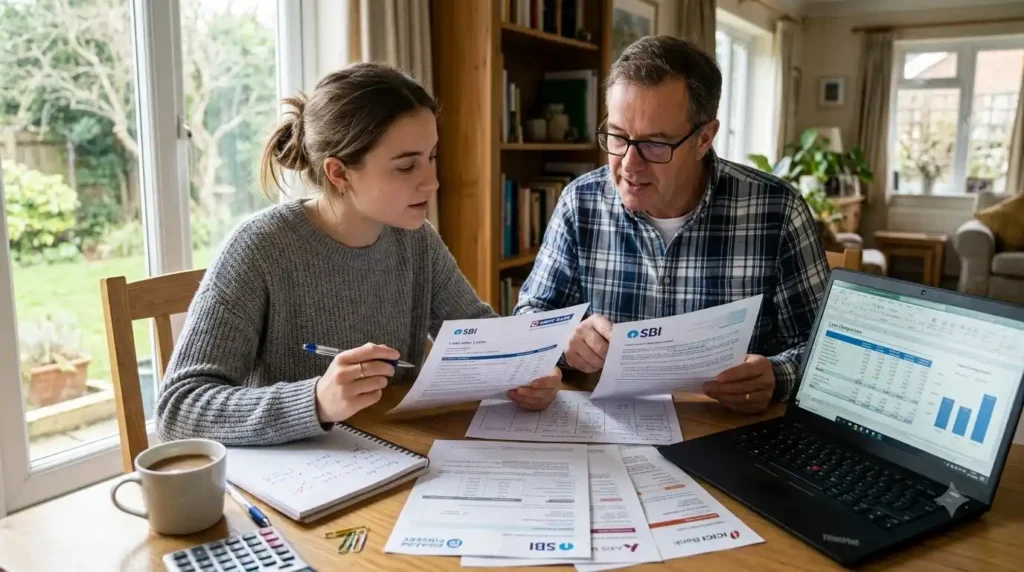
The number of student loan services India offers has grown considerably over the past few years, and it’s no longer just a choice between your family’s regular bank and one or two competitors. Public sector banks, private banks, NBFCs specializing in education financing, and a newer wave of fintech lenders now all compete for the same borrower, each with a genuinely different approach to risk, speed, and pricing.
Most families still default to whichever bank they already have a savings account with, without realizing how differently these provider types actually operate. This guide breaks down what separates them, so you’re choosing based on fit rather than familiarity.
Public sector banks remain the benchmark for interest rates among student loan services India has to offer, particularly under government-backed interest subsidy schemes for eligible income groups. Their processing tends to be more paperwork-intensive, and secured loans involving property valuation can take four to six weeks, sometimes longer, due to more conservative internal verification processes.
Where public sector banks genuinely excel is loan amount ceiling for secured loans and long-term cost, since their interest rates on a secured education loan generally undercut private banks and NBFCs over a full repayment tenure. The tradeoff is patience: these institutions aren’t built for speed, and families on a tight visa timeline sometimes find the wait genuinely difficult to manage without additional planning.
Private banks generally process applications faster than public sector counterparts, often with more flexible documentation requirements and quicker internal decision-making. Interest rates typically sit a notch above public sector banks but below most NBFCs, making them a reasonable middle-ground option for families who need faster turnaround without accepting NBFC-level pricing.
Private banks also tend to be more comfortable with slightly non-standard profiles, a self-employed co-applicant with reasonably well-documented income, for instance, than the more rigid criteria some public sector banks apply.
NBFCs specializing in education financing have carved out a specific niche among student loan services India offers: faster approval, more flexible eligibility, and willingness to lend without collateral for many profiles. An unsecured education loan through an NBFC is often the fastest path to funding for students without property or fixed deposits to pledge.
This convenience comes at a cost, interest rates from NBFCs typically run higher than both public and private banks, sometimes meaningfully so over a multi-year repayment period. For students with a strong university profile and a reasonable co-applicant income but no collateral, this tradeoff is often worth it. For those who do have collateral available, the long-term cost difference is usually significant enough to justify going the secured route instead, even with the added processing time.
A newer category of digital-first lenders has emerged, offering largely online applications, faster document upload processes, and in some cases, algorithm-assisted approval decisions. These platforms appeal to students comfortable managing the entire process digitally, without needing to visit a branch for most steps.
Digital lenders can be a good fit for smaller loan amounts or as a secondary option when comparing offers, but it’s worth checking their specific university and course recognition list carefully, since some of these newer entrants have narrower coverage than established banks and NBFCs, particularly for less well-known institutions abroad.
Rather than defaulting to a single provider type, it helps to map your specific situation against what each category does best. If you have property or fixed deposits available and aren’t under severe time pressure, a public sector bank’s secured loan usually offers the best long-term cost. If speed matters more, or your family doesn’t have collateral, an NBFC or private bank becomes more relevant, understanding the interest rate tradeoff involved.
If your visa appointment is approaching before your preferred lender’s typical processing time allows, checking whether a pre-visa disbursement loan is available, regardless of provider type, can bridge that specific timing gap without forcing you into a higher-cost lender purely for speed.
Many families apply only to their existing bank without checking whether a different provider type would genuinely suit their situation better, missing meaningfully better terms elsewhere. Others choose an NBFC purely for speed without calculating the actual long-term interest cost difference compared to a secured loan they could have qualified for with slightly more patience.
Some students are drawn to newer digital lenders primarily for the convenience of an online process, without verifying whether their specific target university is actually on that lender’s recognized list. A frequent mistake is not comparing at least one option from each broad category, staying within a single type and missing the tradeoffs visible only when comparing across the landscape.
Map your specific priorities, lowest cost, fastest approval, or no collateral required, before choosing which category of lender to approach first, rather than starting with whichever bank is most familiar. Get at least one quote from a public sector bank even if you expect to go with an NBFC or private bank, simply to understand the actual cost gap you’re accepting for faster processing.
If you’re leaning toward a newer fintech lender, specifically verify their recognized university list for your target institution before investing time in their application process. Whichever category you choose, prepare your documentation with the same rigor, since incomplete paperwork causes delays regardless of which type of lender you’re working with.

Book a free consultation and get clarity on your loan journey today.
© 2026 Loan Scholar . All Rights Reserved.Designed, Developed & Marketed by
SDS
Book a free consultation and get clarity on your loan journey today.
© 2026 Loan Scholar . All Rights Reserved.Designed, Developed & Marketed by
SDS