Education Loan Rejected? Here's Exactly What To Do Next

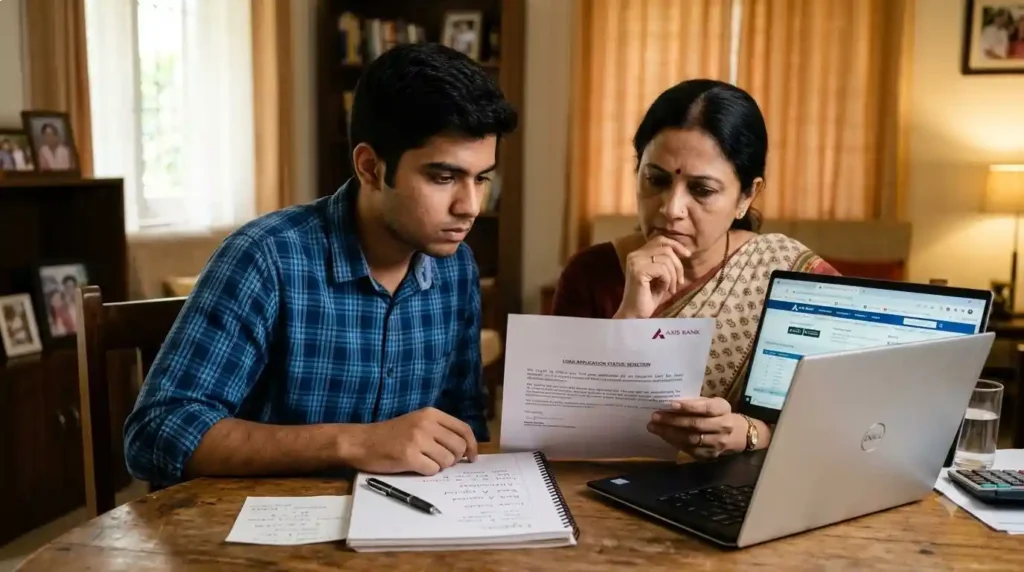
Student reviewing education loan rejected letter and planning next steps

Getting an education loan rejected feels like the process has hit a wall, especially when a visa appointment or fee deadline is already approaching. It isn’t the end of the road. Most rejections stem from a specific, identifiable reason, a documentation gap, a co-applicant issue, or a collateral mismatch, and once you know the actual reason, correcting it and reapplying is usually far more straightforward than students expect.

This guide breaks down the process by rejection reason, so instead of reapplying blindly and risking a second rejection, you know exactly what to check and fix first.

Why Understanding The Actual Rejection Reason Matters

Banks aren’t always explicit about why an education loan application was declined, and many students respond by applying to another bank with the exact same documentation, hoping for a different outcome. This often leads to a second rejection, since the underlying issue, whatever it was, hasn’t actually been addressed.

Before reapplying anywhere, request a clear reason from the lender, even if it takes a follow-up call or a written request. Most banks will indicate at least a general category, income insufficiency, credit score, collateral valuation, or documentation gaps, which tells you exactly where to focus your correction.

Common Reasons An Education Loan Gets Rejected

Low Or Inconsistent Co-Applicant Income

This is one of the most frequent reasons for rejection, particularly when the co-applicant’s income doesn’t comfortably support the requested loan amount relative to existing financial obligations.

Low CIBIL Score Of The Co-Applicant

A co-applicant with a low or damaged credit score signals repayment risk to the lender, regardless of how strong the student’s academic profile is.

Collateral Valuation Or Title Issues

For secured loans, a property valued lower than expected, or one with an unclear or disputed title, is a common reason for rejection or delay.

Incomplete Or Inconsistent Documentation

Mismatched information across documents, an outdated address, inconsistent income figures, or missing pages, can trigger a rejection even when the underlying financial profile is sound.

University Or Course Not Recognized By The Lender

Some lenders maintain internal lists of universities or courses they’re comfortable funding, and an admission to an institution outside that list can result in rejection, even if your financial profile is strong.

Loan Amount Exceeding The Lender's Comfort Level

Particularly relevant for expensive courses, a requested amount that significantly exceeds what a specific lender typically approves, relative to your collateral or co-applicant income, can lead to rejection even when partial approval might have been possible.

Step-By-Step: What To Do After Each Type Of Rejection

If The Issue Is Co-Applicant Income

Consider adding a second co-applicant, such as another parent or sibling with stable income, to strengthen the application. Alternatively, look at lenders with more flexible income-to-loan ratio criteria, or reduce the requested loan amount slightly if a smaller, more comfortable figure is realistic given available scholarships or savings.

If The Issue Is Credit Score

Check the co-applicant’s credit report directly for errors, since inaccurate entries are more common than most families realize and can sometimes be corrected relatively quickly. If the score is genuinely low due to past repayment issues, consider whether a different family member can serve as co-applicant instead, or explore an unsecured education loan from an NBFC with more flexible credit criteria, understanding this may come with a higher interest rate.

If The Issue Is Collateral Valuation

Get an independent property valuation to understand the actual gap between your expectation and the bank’s assessment. If the shortfall is significant, consider combining the property with an additional asset like a fixed deposit, or explore a secured education loan with a different lender whose valuation approach may be more favorable for your specific property type or location.

If The Issue Is Documentation

This is often the most straightforward to fix. Cross-check every document for consistency, names, addresses, income figures, and dates, before resubmitting. A second application with clean, consistent documentation frequently succeeds where the first one didn’t, even with an identical financial profile.

If The Issue Is University Or Course Recognition

Check with a few different lenders directly, since recognition lists vary meaningfully between banks and NBFCs. A university not recognized by one lender may be entirely acceptable to another, particularly among lenders who specialize in a broader range of international institutions.

If The Issue Is Loan Amount

Revisit your full cost of attendance calculation to confirm the amount is accurate and not inflated by avoidable expenses. Check whether scholarship assistance could reduce the amount needed, or consider splitting the requirement across a secured loan for the larger portion and a smaller unsecured loan to bridge any remaining gap.

How Soon You Can Reapply

There’s generally no fixed waiting period to reapply for an education loan after a rejection, but reapplying immediately without addressing the underlying issue rarely changes the outcome. Once you’ve identified and corrected the specific problem, whether that’s adding a co-applicant, fixing documentation, or adjusting the loan amount, you can typically reapply right away, either with the same lender or a different one better suited to your corrected profile.

If your visa appointment is approaching while you’re resolving a rejection, check whether a pre-visa disbursement loan is an option once your corrected application is at least conditionally approved, so you’re not forced to delay your visa process while final sanction is completed.

Benefits Of Addressing The Rejection Properly

  • Significantly higher approval odds on your next application compared to blindly reapplying elsewhere
  • Saves time compared to repeated rejections from lenders with the same underlying issue
  • Often results in better loan terms once the actual problem, rather than a symptom, is corrected
  • Reduces stress around visa and fee deadlines by resolving the issue with a clear plan rather than uncertainty
  • Builds a stronger, more accurate application that also holds up better during future refinancing if needed

Common Mistakes Students Make After A Rejection

Many students reapply to a second bank with identical documentation, without adjusting for the actual reason behind the first rejection, leading to a repeat outcome. Others assume a rejection means they’re entirely ineligible for an education loan, when in most cases it reflects a specific, correctable issue rather than a fundamental disqualification.

Some families panic and turn to a high-interest personal loan as a workaround instead of addressing the education loan rejection directly, ending up with meaningfully worse long-term terms than a corrected education loan application would have offered. Others don’t request a clear rejection reason from the bank at all, guessing at the cause and correcting the wrong thing before reapplying.

Expert Tips

Always request the specific rejection reason in writing or through a direct conversation with the loan officer, rather than assuming based on general expectations. Before reapplying, get a second, independent opinion on your corrected application, whether from a different bank’s pre-application assessment or an experienced loan consultant, to confirm the fix actually addresses the issue.

If your rejection involved collateral, get an independent valuation done before approaching another lender, so you’re not surprised by a second, similarly low valuation. Keep a clear record of what was submitted and what was flagged in the first application, so your second attempt is genuinely different rather than a repeat with minor tweaks.

FAQs

Yes, there's typically no mandatory waiting period, but reapplying without correcting the underlying issue usually leads to the same outcome. Identify and fix the specific reason first.
A loan application itself, and its rejection, doesn't directly damage your credit score, though multiple rapid loan enquiries in a short period can have a minor impact through hard credit checks.
It depends on the reason. Documentation issues can often be resolved and resubmitted to the same bank. Fundamental mismatches, like a university not on a lender's recognized list, are better addressed by approaching a different lender entirely.
Start by getting a clear reason for the rejection directly from the lender, since this determines your next step. If it's a co-applicant income or credit score issue, consider adding a stronger co-applicant or exploring lenders with more flexible criteria. If it's a collateral valuation issue, get an independent valuation and consider combining assets or approaching a different lender. If it's a documentation problem, cross-check everything for consistency before resubmitting. Once corrected, reapply with clean documentation, and consider working with an experienced education loan consultant who can help match your corrected profile to the right lender rather than repeating the same rejection elsewhere.
Yes, particularly when the original rejection was due to income insufficiency or credit score concerns, a second co-applicant with a stronger financial profile can meaningfully improve approval odds.
If the rejection was specifically due to the loan amount exceeding the lender's comfort level relative to your income or collateral, reducing the requested amount, potentially supplemented by a scholarship or personal contribution, can improve your chances.
Credit bureaus don't record loan rejections in a way that other lenders can directly see the specific rejection, though multiple loan enquiries in a short window may appear on your credit report and could be questioned by a subsequent lender.
It's generally better to address the underlying rejection reason and pursue a corrected education loan application first, since personal loans carry higher interest rates and offer no tax benefit compared to a properly structured education loan.

Conclusion

An education loan rejected on the first attempt is rarely a dead end; it’s usually a signal pointing to one specific, fixable issue. Understanding exactly why the rejection happened, whether it’s co-applicant income, credit score, collateral valuation, or documentation, and correcting that specific problem before reapplying consistently leads to a successful second application.

Rushing into a second application without this diagnosis is what turns a single, correctable setback into a repeated, more stressful cycle of rejections.

Strong Call-to-Action

Had your education loan rejected and not sure why? Book a free consultation with Loan Scholar and get a clear diagnosis along with a corrected reapplication plan.